
WHY I MAKE EMPTY ROOMS
Before I started painting, I made very detailed drawings—basically photorealistic replications of photographs. They were usually figures from popular culture. Michael Stipe from R.E.M. was a big one.
Even then, I was interested in controlling my materials. I didn't like crayon lines overlapping. When I made drawings with Crayola markers, I tried to make areas of color completely even, without the marks overlapping. I tried to control watercolor, attempting to create hard edges with a medium that wasn't particularly designed for that kind of structure.
I loved planning projects and establishing boundaries within them. There was security in knowing the structure before I began and then figuring out what I could do inside it.
For a brief period in middle school, I thought I might become an architect. It seemed like a way of combining art, which I loved, with math, something that had always come naturally to me. The idea didn't last very long, but looking back, I think the desire for order and structure remained in my work.
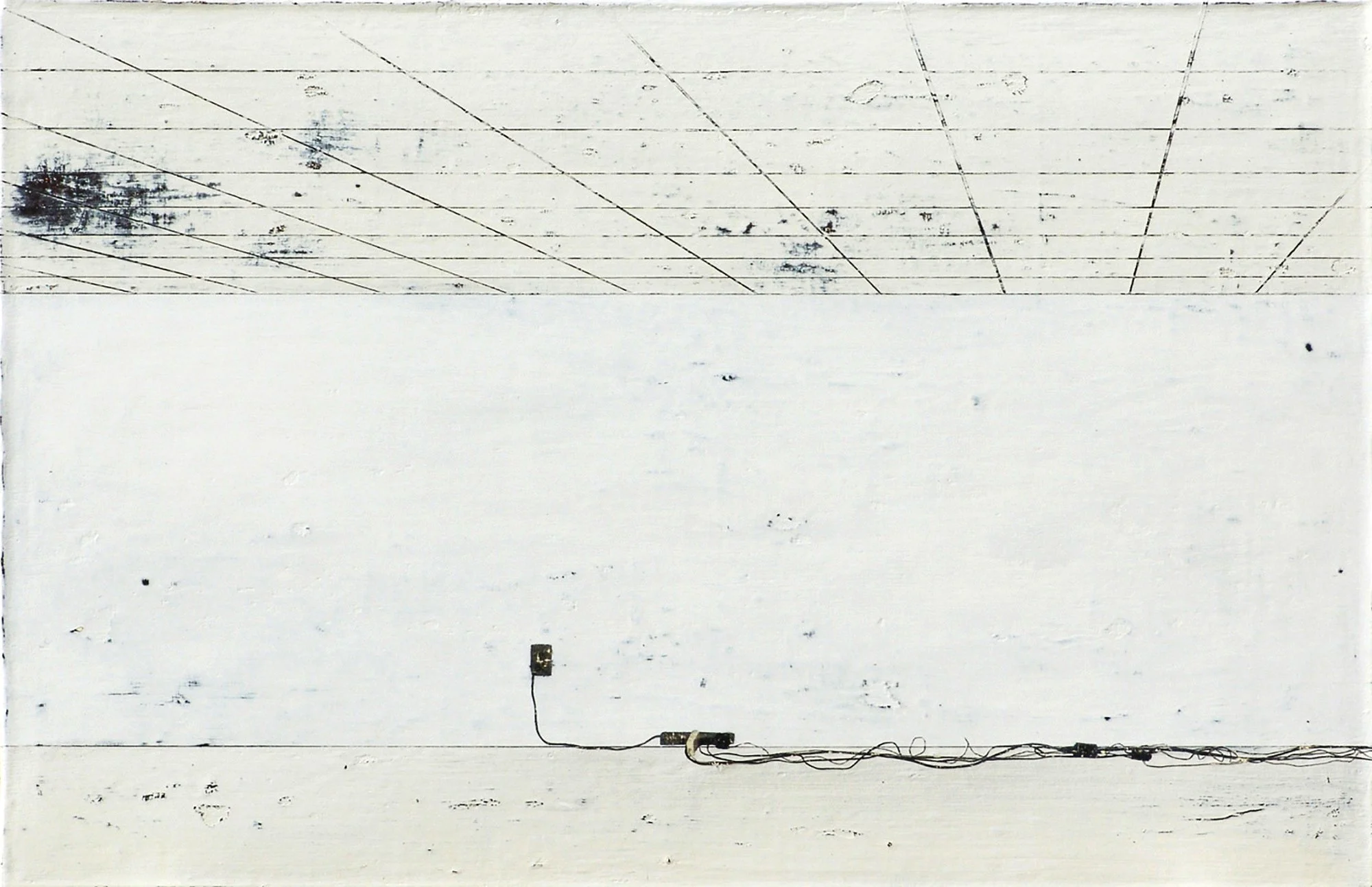
Cree Indians Call Electricity Nimischiiuskataau (Fire That Shakes the Ground) — acrylic, pigment transfer on canvas, 30 x 46 inches, 2008
I grew up in a stable home. We lived throughout my childhood in a Dutch Colonial house in downtown Aiken, South Carolina, built shortly after the Civil War. I loved the security of that house. I think there is still something about architecture as shelter—the idea of being contained within a space—that I find reassuring.
At the same time, I've always been drawn to spaces that overwhelm that sense of containment.
Across the street from our house was my elementary school, Aiken Elementary. By the time I was in middle school, the school had moved and the building was vacant. We would go inside and wander through it. We never vandalized it. It was a place where we had spent our early childhood, and in some strange way we felt ownership of it.
There was something extraordinary about having this large, beautiful, empty building to ourselves.
I encountered that feeling again decades later in shopping malls. Places that had once been crowded and thriving were, by around 2010, barely holding on. You could walk through enormous spaces designed for thousands of people and encounter almost no one.
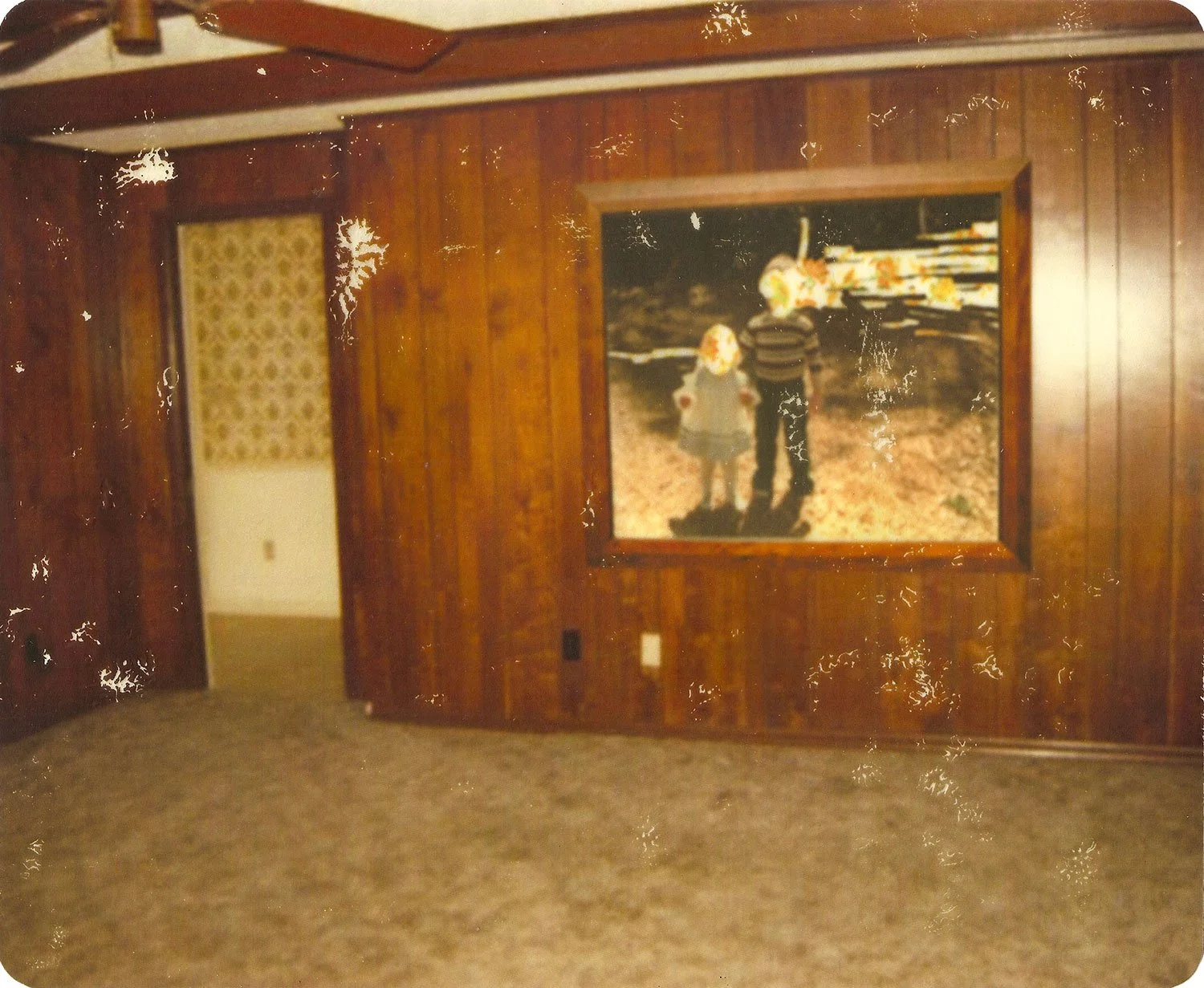
The Way We Live — pigment transfer on paper, 8 x 10 inches, 2015
The idea of the liminal space has become a familiar cultural aesthetic, and I was glad when I finally encountered that language because I had wondered for years what that particular feeling was.
Large empty spaces can make me feel incredibly small and incredibly large at the same time.
People sometimes describe something similar when talking about the sublime in art or nature. For me, it can happen in a man-made environment. An empty school, a dying mall, or a large church can produce the same sensation. There is isolation, but also security. You're alone, but you're inside. There is shelter around you even when the scale of the space seems to diminish you.
I think the empty rooms come from somewhere inside that contradiction.
They allow me to construct a space and control it. Walls establish boundaries. Perspective organizes everything. Patterns repeat. Furniture occupies specific positions. Floor tiles recede toward an unknown space somewhere beyond the painting.
But within that structure I can play.
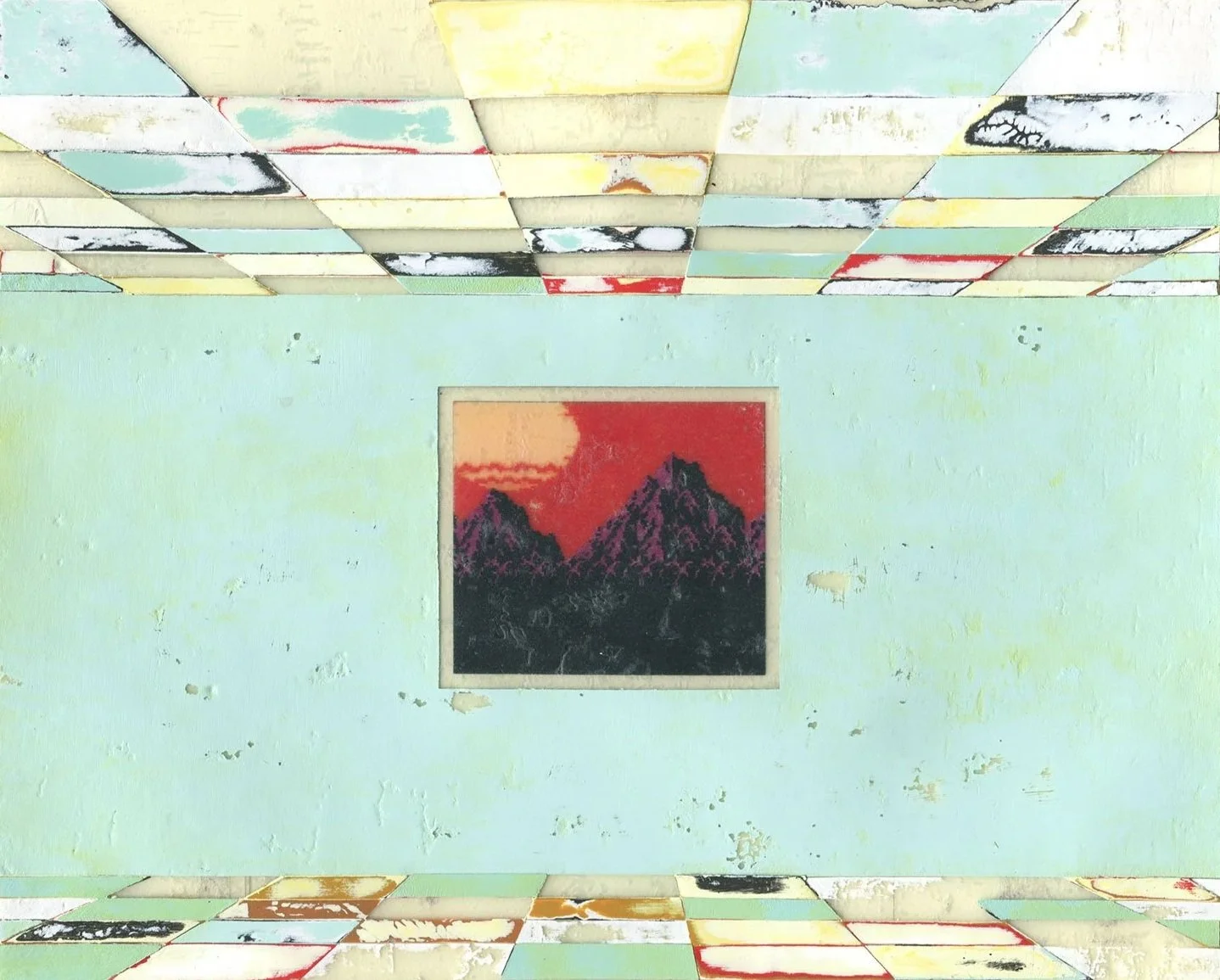
Rygar's Room — acrylic, pigment transfer on paper, 8 x 10 inches, 2018
The tiled floors in particular have become places where I experiment. Each individual section can operate almost like a small painting—a test for a color combination that might eventually appear somewhere else. The architecture establishes the rules, but the rules give me room to experiment.
That's one reason I don't think these paintings translate as easily into a completely freehand approach. Their structure isn't simply a consequence of how I paint them. The structure is part of what the rooms are about.
The rooms can be controlled and deteriorated, secure and unsettling, cold and energetic. They can suggest shelter while emphasizing that no one is there.
All of those contradictions can exist in the same space.
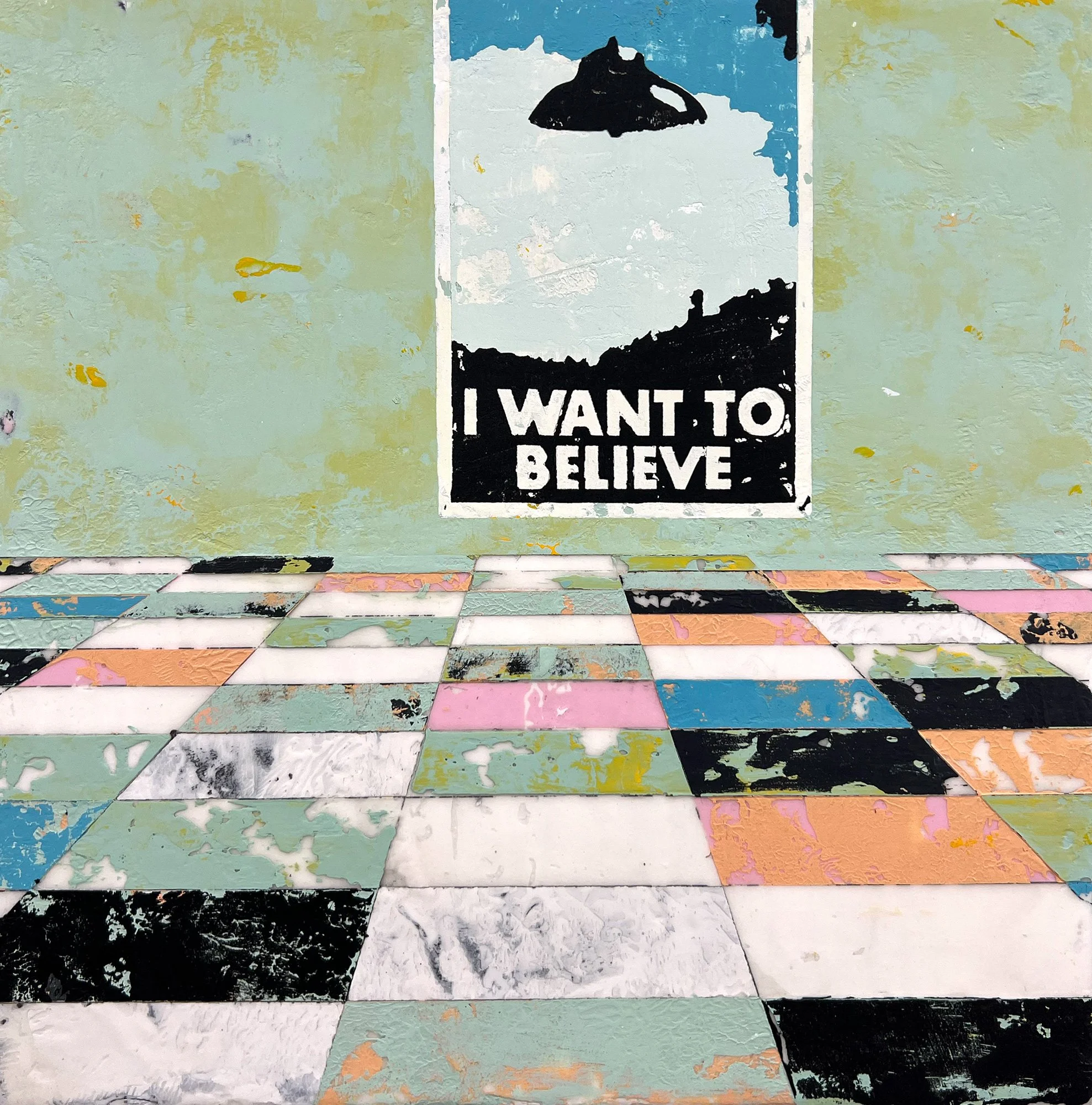
I Want to Believe — acrylic on canvas, 10 × 10 inches, 2026