
HOLLIS BROWN THORNTON
Born 1976
Lives and works in Aiken, South Carolina
EDUCATION
1999
BFA, University of South Carolina, Columbia, South Carolina
SELECTED SOLO EXHIBITIONS
2027
Candl Fine Art, Augusta, GA
2026
A Tale of Stolen Time
Gertrude Herbert Institute of Art, Augusta, GA
View Exhibition
2018
There's Still Time
Florence County Museum, Florence, SC
2015
A Long Time Ago
Gauntlet Gallery, San Francisco, CA
2013
The Land Between Solar Systems
Linda Warren Projects, Chicago, IL
2012
Unexplained Mysteries of the Universe
AISHO MIURA ARTS, Tokyo, Japan
2009
Hollis Brown Thornton: The Geography of Space
Sumter County Gallery of Art, Sumter, SC
2008
The Earth on the Back of the Giant Turtle
Linda Warren Gallery, Chicago, IL
2007
Great Sea Creatures & the Earth on the Back of the Giant Turtle
if ART Gallery, Columbia, SC
2006
Hollis Brown Thornton
Mary Pauline Gallery, Augusta, GA
2005
Great Sea Creatures & Punica Granatum
City Art, Columbia, SC
Great Sea Creatures & Punica Granatum
Jackson Gallery & Sculpture Garden, Aiken, SC
2004
The Great Fish & Every Kind of Plant that Bears Seed
Jackson Gallery & Sculpture Garden, Aiken, SC
2002
Hollis Brown Thornton
Verdir, Chicago, IL
2001
Hollis Brown Thornton
80808 Vista Studios, Columbia, SC
Hollis Brown Thornton
Aiken Center for the Arts, Aiken, SC
2000
Hollis Brown Thornton
Gallery 701, Columbia, SC
SELECT GROUP EXHIBITIONS
2025
A Sense of Place
Gertrude Herbert Institute of Art, Augusta, GA
2024
Eye to Eye: The Roefs & Waddell Collection
701 Center for Contemporary Art, Columbia, SC
2018
30th Anniversary Juried Art Exhibition
South Carolina State Museum, Columbia, SC
2015
Beacon
Gauntlet Gallery, San Francisco, CA
2014
Group Show
28 Matignon, Paris, France
Lost Moments: Scott Listfield and Friends
Gauntlet Gallery, San Francisco, CA
Building a Universe
South Carolina State Museum, Columbia, SC
2013
American Painting Today: Physical & Visceral
Krasl Art Center, St. Joseph, MI
Westobou Festival
Klacsmann Gallery, Augusta, GA
2012
Abstract Art in South Carolina: 1949-2011
South Carolina State Museum, Columbia, SC
2011
GROUP SHOW
AISHO MIURA ARTS, Tokyo, Japan
2010
2 Year Anniversary Exhibition
POVevolving Gallery, Los Angeles, CA
ULTRA003 Emerging Directors' Art Fair
Tokyo, Japan
2009
PHOTO-BASED
Barbara Archer Gallery, Atlanta, GA
Gallery Artists Group Show
Linda Warren Gallery, Chicago, IL
2008
20th Anniversary Juried Art Exhibition
South Carolina State Museum, Columbia, SC
Internationales Künstlersymposium 10
Volksbank, Kaiserslautern, Germany
The Salon I & II
if ART Gallery, Columbia, SC
2007
Art Miami, Miami, FL
Project Space
Linda Warren Gallery (Project Space), Chicago, IL
Kleinformat / Small Format, The Columbia - Kaiserslautern Exchange
if ART Gallery, Columbia, SC
A Holiday Exhibition
Mary Pauline Gallery, Augusta, GA
2006
South Carolina Birds: A Fine Arts Exhibition
The City Gallery at Waterfront Park, Charleston, SC
A Holiday Exhibition
Mary Pauline Gallery, Augusta, GA
2004
Aberration/Pollination
Linda Warren Gallery, Chicago, IL
South Carolina Birds: A Fine Arts Exhibition
Sumter Gallery of Art, Sumter, SC
2003
The Felt Moment
Columbia Museum of Art, Columbia, SC
SELECT CLIENTS
The New Yorker, Netflix, Vice Magazine, Urban Outfitters, Marc O’Polo, Square Enix, Society6, Columbia University Press, in4mation, FM-84
BIO
Hollis Brown Thornton is an American artist whose paintings, drawings, and pigment transfers explore memory, fragmentation, and the passage of time. Born in 1976 in Aiken, South Carolina, Thornton earned a BFA from the University of South Carolina in 1999. After living in Chicago from 2001 to 2005, he returned to Aiken, where he works from his warehouse studio.
Using acrylic and oil paint, permanent marker, and a pigment transfer process developed over several years, Thornton creates images that blur the line between recollection and erosion. VHS tapes, cassettes, early personal computers, family photographs, and fragments of popular culture appear throughout the work, often partially erased, simplified, or obscured through pixelation and layered surfaces.
Thornton’s work has appeared in exhibitions, publications, and collections connected to clients including The New Yorker, Netflix, and Vice Magazine. Working across painting, drawing, and printmaking for more than two decades, he continues to develop a body of work centered on memory, absence, and transition.
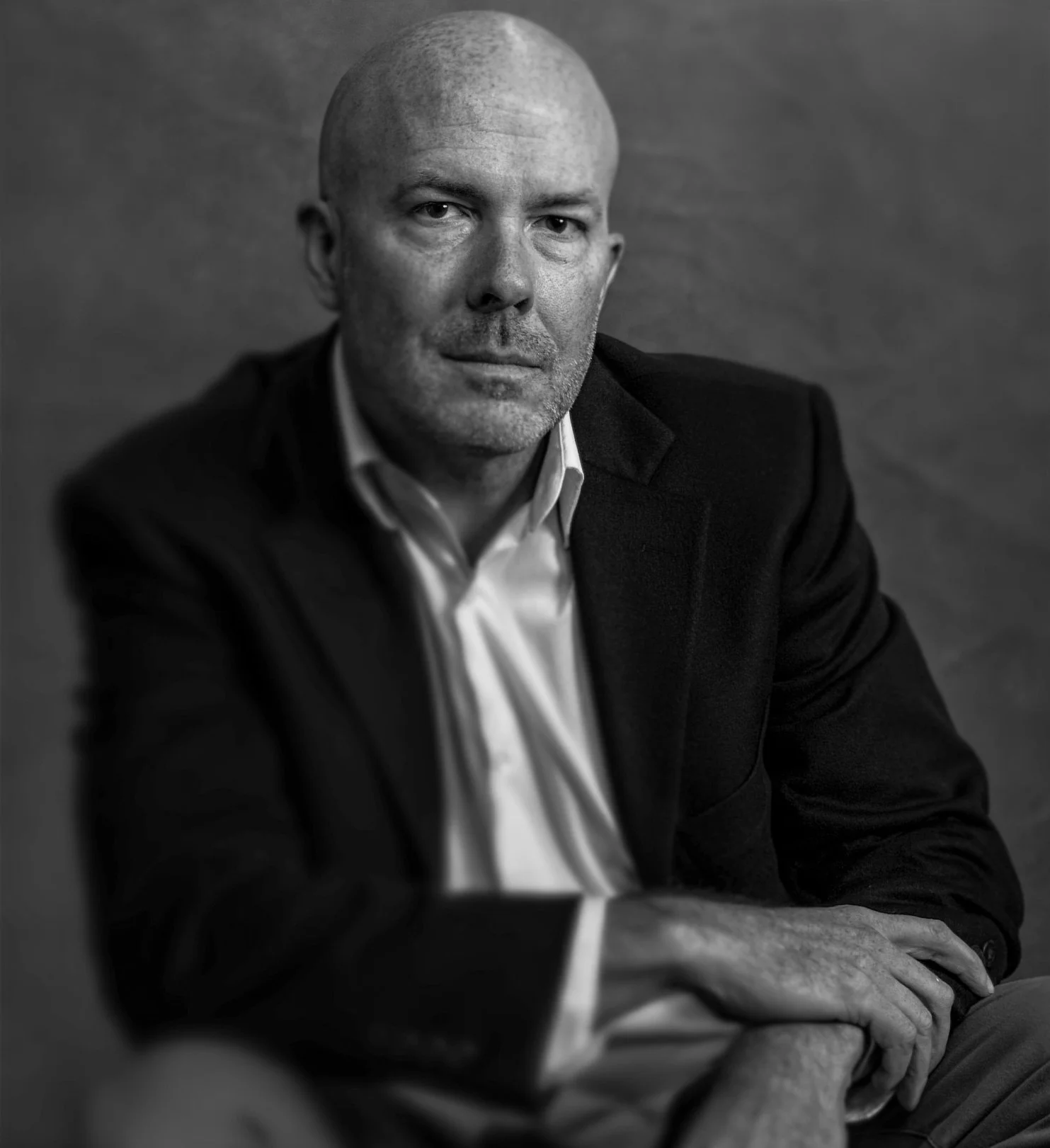
DrakeWhite, 2026
INTENT
My work is mostly about memory and time—how images and objects remain after their original context is gone. I think of the work as a kind of residual memory: an attempt to collect and give physical form to something that can no longer be completely recovered.
I use familiar imagery, often drawn from photographs, television, and other recorded sources. Stencils preserve the structure of those images while reducing them to essential shapes. The hard edges give the images the authority of something recorded, while scrubbing, washes, erasure, and abrasion undermine that certainty.
I’m interested in the tension between those two things: something can feel definite and incomplete at the same time. The edge can say this existed, while the rest of the image says this is all I can recover.