
WHY I PAINT GHOSTS
The ghost images began as an attempt to combine loose line drawings with family photographs. I wanted something that connected the figures to their surroundings—something that could both erase the figures and extend them outward.
The lines became a way of articulating the exchange between a figure and its environment: the way we are influenced by our surroundings while also attempting to impose ourselves on them and understand them. They sometimes function like thought bubbles, but more abstractly—as extensions of the figures themselves.
At the same time, I began removing the identities of the people in the photographs. Their faces disappeared and the figures became blank forms or avatars occupying a particular moment in time.
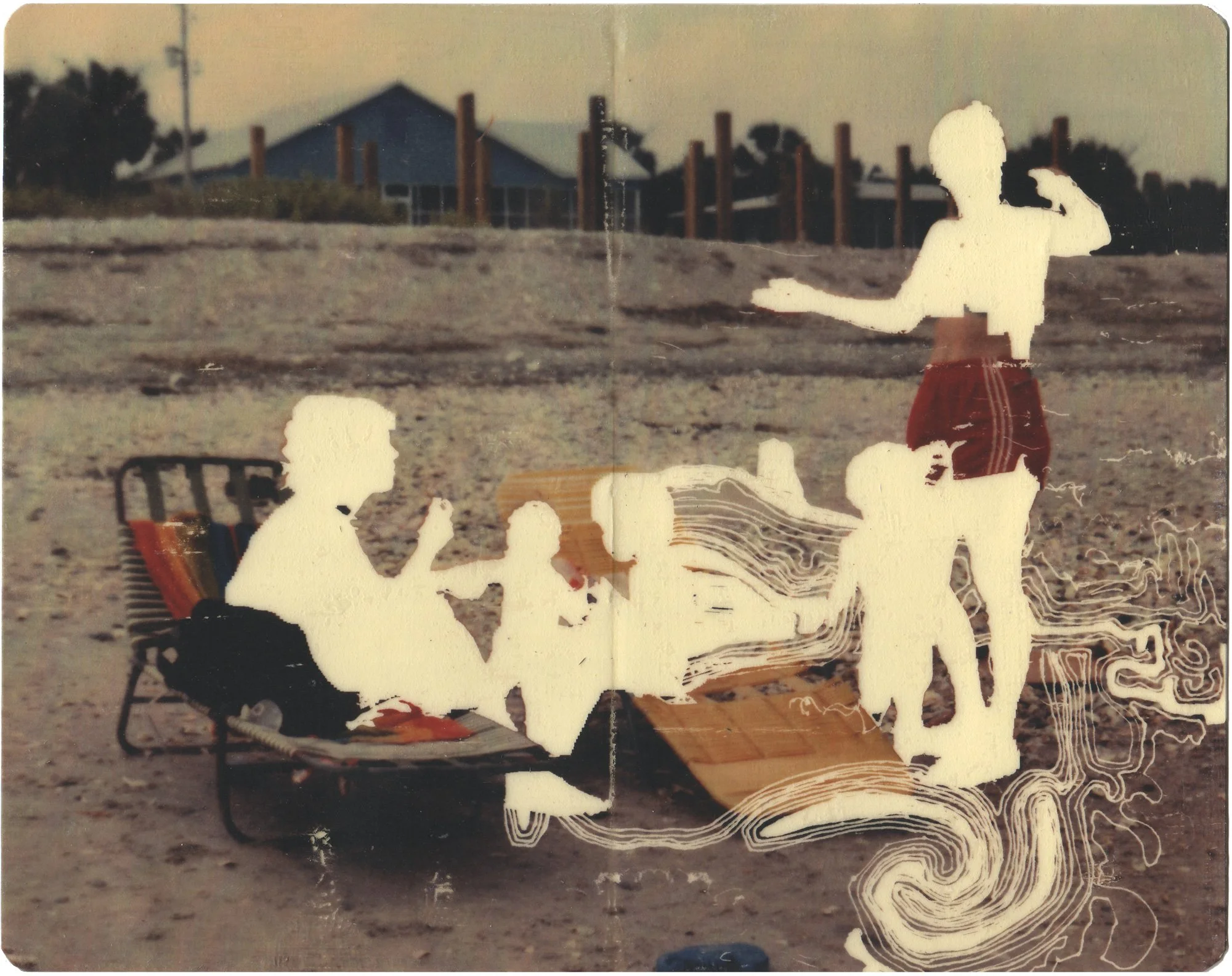
The Origin of Life on Earth — pigment transfer on paper, 8 x 10 inches, 2008
A photograph is already an attempt to do something impossible: freeze a moment and remove it from the continuing movement of time. The lines disrupt that stillness. They introduce movement and uncertainty back into the image, breaking apart the solidity of the photographed moment.
What remains interests me.
The identity of a person may be gone, but certain things survive: a hairstyle, a T-shirt design, a piece of furniture, a VHS tape. Small details become artifacts of another time.
Drawing the photograph removes even more information. I simplify the image, reduce the colors, eliminate details, and decide what is necessary and what is simply noise. Other elements may be added, sometimes from completely different photographs. This is the stage when the captured moment begins to become something else.
The drawing is no longer an attempt to reproduce the photograph. It becomes my best articulation of what I retain from it—what I remember, notice, or choose to hold onto.
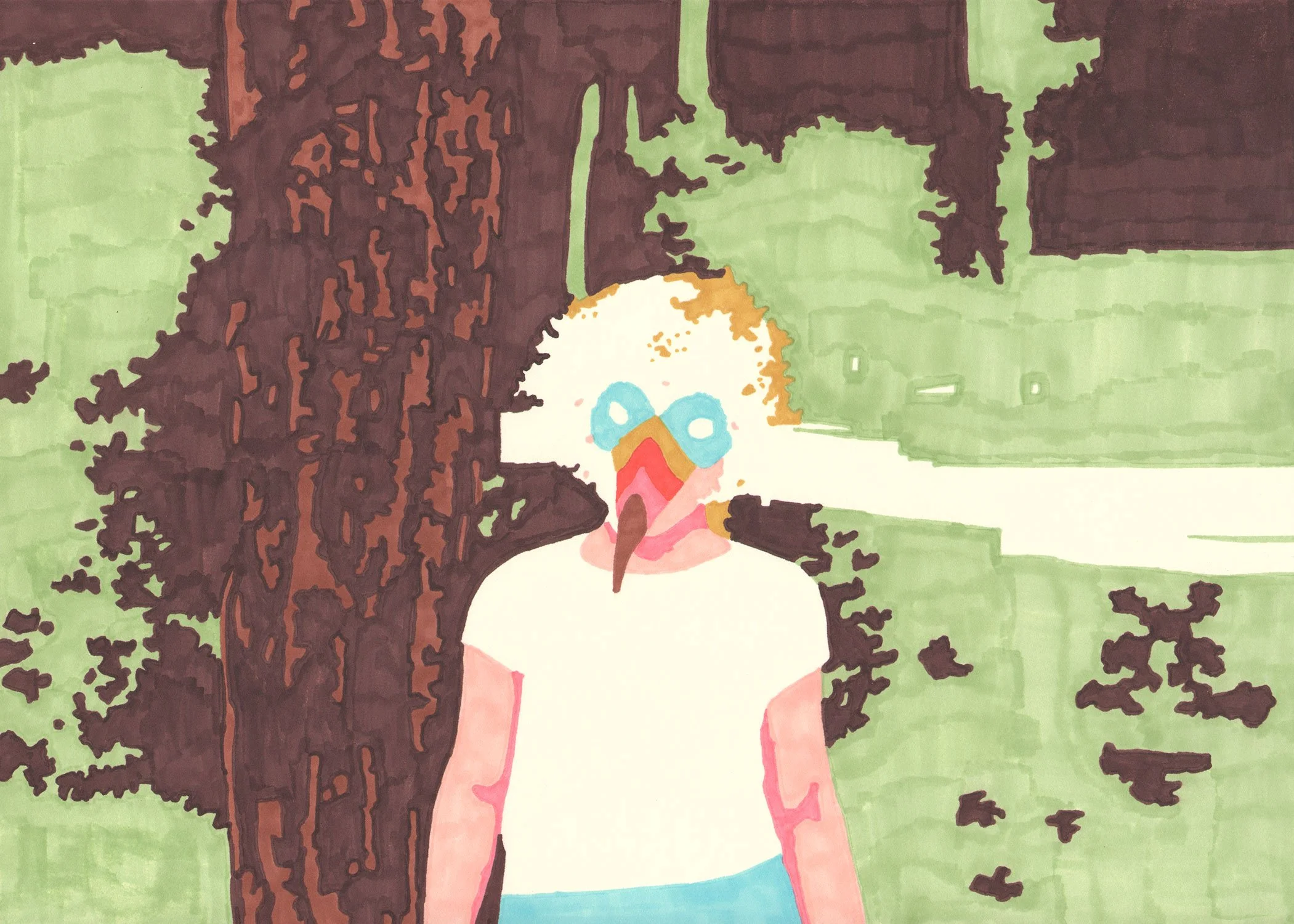
Toucan Sam — permanent marker on paper, 10 x 15 inches, 2016
In that sense, the process begins to behave like memory itself. Certain things remain remarkably specific while enormous amounts of information disappear.
The painting uses structure to reconstruct that simplified image. Hard edges and defined shapes give the remaining information a kind of certainty. I try to be precise with what little information is left, removing anything that doesn't seem necessary.
Then I begin damaging that certainty.
Scrubbing, abrasion, washes, and removal break the image down again. The painting starts to feel less like a newly made image and more like a relic—something that has already existed somewhere and accumulated a history.
For me, that final deterioration is important. The image becomes an object that appears to have survived something: a fragment of a reality that is constantly being constructed, remembered, altered, and lost.
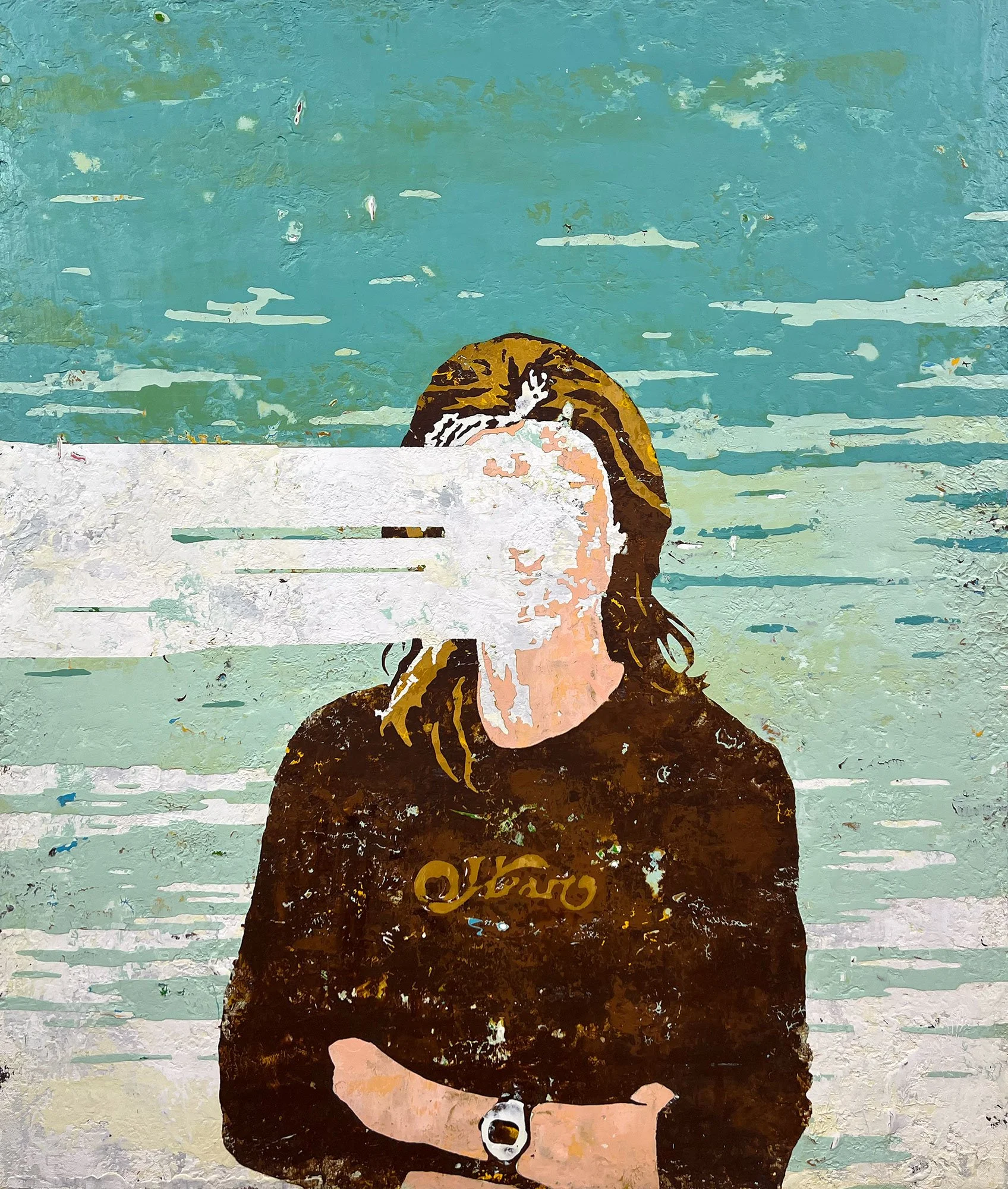
Special Season of the Young — acrylic on canvas, 30 x 26 inches, 2026